Central cooling
Separate seawater and freshwater to protect engines and auxiliary equipment.
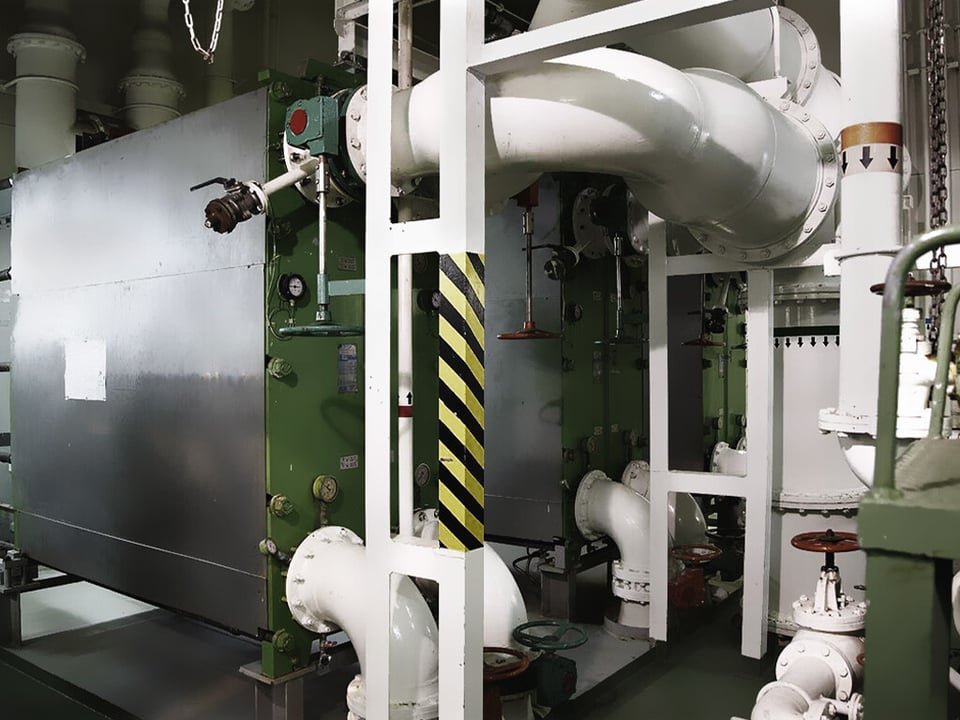
Plate heat exchangers support central cooling, jacket-water and lubricating-oil circuits, separating seawater from freshwater in limited engine-room space while remaining accessible for service.
Separate seawater and freshwater to protect engines and auxiliary equipment.
Control engine cooling-water temperature as load changes.
Remove heat from engine, gearbox or hydraulic-oil circuits.
Use available waste heat for shipboard services.
Opens for cleaning and supports plate or gasket replacement during planned service.
Improves resistance to chloride corrosion in seawater duties.
Selected for oil, temperature and maintenance interval.
Common considerations only; final selection is duty-specific.
Marine selection must cover more than heat duty: limited space, continuous operation and planned service all matter.
Confirm salinity, chloride level, strainer arrangement and access for backflushing or manual cleaning.
Check inlet and outlet temperatures, heat load, flow rate and allowable pressure drop at design conditions.
Confirm design pressure, design temperature, connection standard, available footprint and service clearance.
Define plate and gasket spares, cleaning interval, redundancy needs and any class or survey documentation.
If the data is incomplete, send what is available and CHENHE will help identify the missing conditions.
Final model, materials, plate count and connections are confirmed through thermal selection.
Send operating data ↗Scan the QR code, or copy our number and start a chat in WhatsApp.
